
AI / News / 3 min read
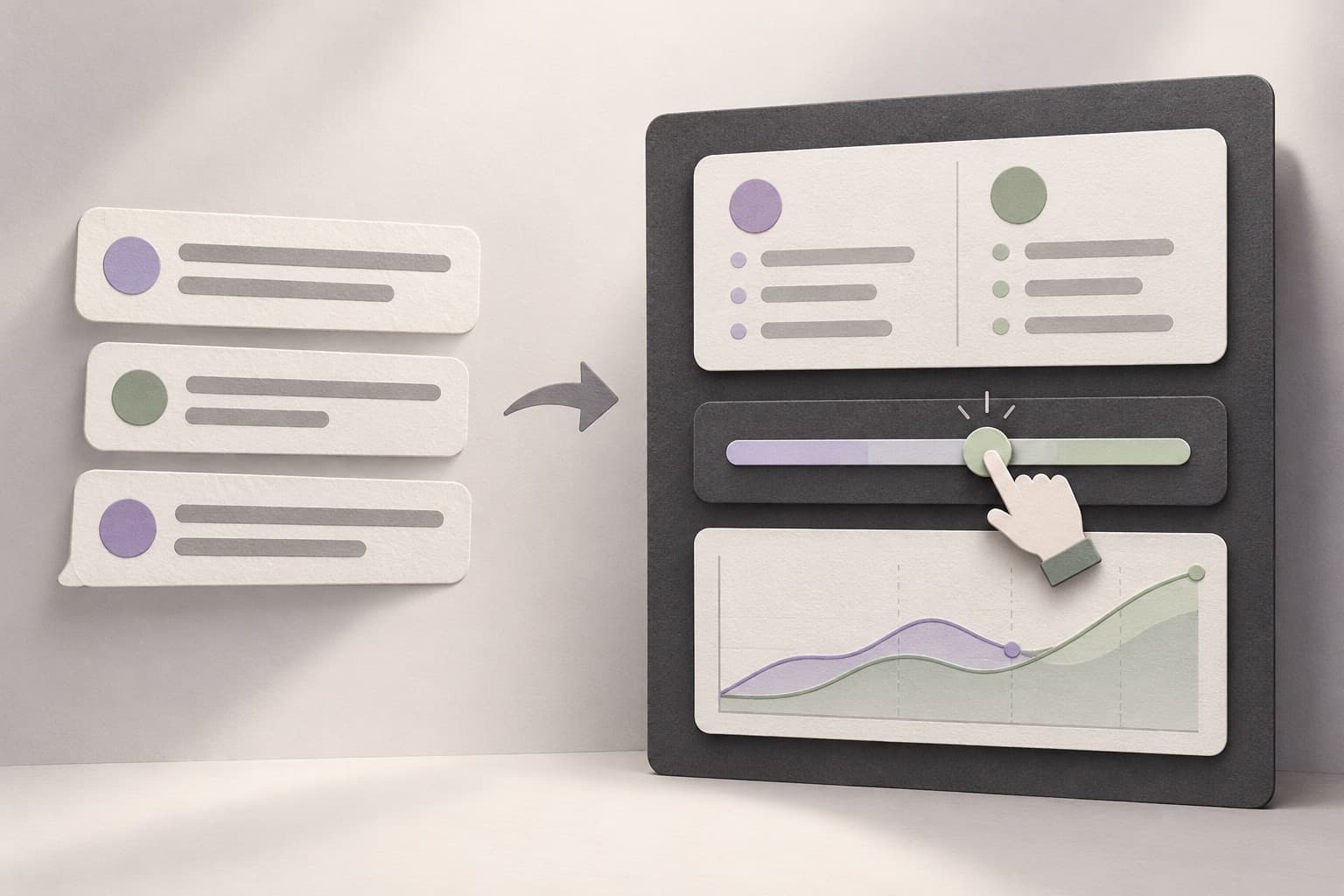
ChatGPT’s interactive answers raise a useful question for business websites
OpenAI announced Intelligent UI on 7 October. See its rollout limits and practical lessons for customer portals, calculators, and business websites.
DIFFWISE.
Loading Diffwise.app.
Preparing your experience.
AI, engineering, and the decisions behind better digital products. Read the news, understand the limits, and see what matters for your business.
AI / News / 3 min read
OpenAI announced Intelligent UI on 7 October. See its rollout limits and practical lessons for customer portals, calculators, and business websites.
AI / News
Anthropic announced Claude Frontier Academy on 2 October. Explore its training plan, participation limits, and practical lessons for business AI projects.
AI / Guide
Understand how MCP connects AI assistants to tools and data. See a practical business example, useful safeguards, and the decisions before development.
AI / Analysis
A practical look at Google AI search guidance, with steps for companies that want clear service pages, useful content, and measurable inquiries.
Plan before you build